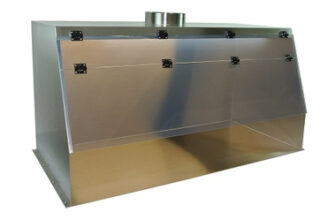
Storing electronic components in an electrostatic discharge (ESD) controlled area requires more than basic moisture protection. Printed circuit boards (PCBs), semiconductor devices, integrated circuits, and other sensitive electronics can experience damage from uncontrolled humidity and static electricity. Choosing the right stainless steel desiccator cabinet helps you maintain suitable storage conditions while supporting organized component handling. However, you should evaluate more than cabinet construction. Material properties, grounding provisions, humidity control, sealing performance, and compatibility with your ESD protection program all influence whether a cabinet meets your application requirements.
1. Evaluate Stainless Steel Construction and Surface Properties
Start by examining the cabinet’s construction. Stainless steel is widely used in laboratory and electronics environments because it offers durability, corrosion resistance, and straightforward cleaning.
For ESD-controlled areas, however, stainless steel construction alone does not automatically establish ESD safety. You should evaluate the cabinet’s electrical properties, surface treatments, coatings, and connections.
Consider these factors:
Material grade: Check whether the stainless steel grade is suitable for your operating environment.
Surface finish: Look for smooth, durable surfaces that minimize contamination and simplify maintenance.
Conductive properties: Confirm that the cabinet’s exposed surfaces provide suitable electrical continuity where required.
Insulating components: Evaluate handles, feet, shelf supports, seals, and coatings that may interrupt electrical continuity.
A properly evaluated Stainless Steel Desiccator Cabinet can provide a durable storage solution for applications requiring controlled moisture conditions and appropriate ESD precautions.
2. Check Grounding and Electrical Continuity
Grounding is an important consideration when introducing metal storage equipment into an ESD-protected area. An improperly grounded conductive cabinet may create an unintended electrical potential difference.
Before selecting a cabinet, determine how it will connect to your facility’s grounding system.
Evaluate:
- Availability of dedicated grounding provisions.
- Electrical continuity between the cabinet body and removable shelves.
- Conductivity of door panels and other accessible metal components.
- Compatibility with your facility’s ESD grounding infrastructure.
- Resistance measurements using appropriate ESD testing procedures.
Do not assume that touching a grounded cabinet automatically makes every stored component ESD-safe. Your ESD coordinator should verify the complete installation against your facility’s ESD control requirements and applicable standards, such as ANSI/ESD S20.20.
3. Assess Humidity Control Capabilities
Moisture control is essential when storing moisture-sensitive electronic components. Excessive humidity can contribute to corrosion, oxidation, and other storage-related problems.
Evaluate the cabinet’s ability to maintain your required relative humidity (RH) range.
Consider the following features:
- Digital humidity monitoring.
- Adjustable humidity control, where applicable.
- Reliable moisture-removal mechanisms.
- Consistent humidity distribution throughout the storage space.
- Clear humidity display and monitoring accessibility.
Your target humidity should depend on the sensitivity of the stored materials and their manufacturer specifications. For moisture-sensitive surface-mount devices, follow the applicable packaging, handling, and storage requirements rather than assuming one humidity setting suits every component.
4. Examine Door Seals and Moisture Protection
A cabinet’s moisture-control performance depends heavily on its ability to limit unwanted air exchange.
Poor door sealing can allow humid ambient air to enter, increasing the workload on the moisture-control system.
Inspect these features before purchasing:
- Door gasket material and durability.
- Consistency of sealing around the entire opening.
- Door alignment and closing mechanism.
- Frequency of door access during normal operations.
- Resistance to wear caused by repeated opening and closing.
You should also consider whether the cabinet can recover its target humidity after repeated access. Ask the manufacturer for humidity recovery information under defined operating conditions.
5. Evaluate Shelving and Storage Organization
Electronic components often require organized storage to prevent accidental handling damage and unnecessary exposure.
Choose a cabinet with an interior configuration that supports your inventory and workflow.
Look for:
- Adjustable shelves for different component sizes.
- Adequate load capacity.
- Accessible storage compartments.
- Smooth shelf surfaces.
- Compatibility with ESD-safe trays and containers.
Pay attention to the electrical properties of removable accessories. An ESD-safe storage arrangement should consider the entire storage system, including trays, packaging, shelf surfaces, and handling procedures.
Proper organization also reduces the time technicians spend searching for components, helping limit unnecessary cabinet access.
6. Verify Compatibility With Your ESD-Controlled Environment
Before installation, confirm that the cabinet supports your existing ESD control procedures.
Evaluate how the equipment interacts with nearby workstations, grounded flooring, personnel grounding systems, and other conductive storage equipment.
You should also establish procedures for:
- Grounding verification.
- Routine electrical continuity testing.
- Humidity monitoring and documentation.
- Safe component transfer.
- Cleaning and maintenance.
- Periodic inspection of seals and electrical connections.
For sensitive electronic assemblies, evaluate the complete handling process rather than treating the cabinet as an independent ESD protection solution.
7. Consider Capacity, Installation, and Maintenance
A suitable cabinet should accommodate your current inventory without restricting accessibility or disrupting the workspace.
Measure the available installation area and compare it with the cabinet’s external dimensions. Consider door clearance, ventilation requirements, electrical connections, and technician access.
You should also review maintenance requirements, including humidity sensor calibration, moisture-control system servicing, gasket replacement, and grounding inspections.
Choosing a cabinet that is easy to maintain helps you achieve consistent storage performance over its operating life.
8. Select a Supplier That Understands Laboratory Storage Requirements
Your supplier should provide clear technical information about cabinet construction, humidity performance, electrical characteristics, and available configurations.
Ask for documentation covering:
- Stainless steel specifications.
- Humidity operating range.
- Sensor accuracy and calibration requirements.
- Grounding provisions.
- Electrical continuity test information.
- Shelf dimensions and load capacity.
- Maintenance recommendations.
Working with an experienced laboratory equipment supplier helps you identify a cabinet that matches your storage requirements and facility conditions.
Explore the laboratory storage solutions available from CleaTech LLC to compare stainless steel desiccator cabinet options for controlled storage applications.
Conclusion
Evaluating stainless steel desiccator cabinets for ESD areas requires attention to both moisture management and electrostatic control. You should examine stainless steel construction, grounding provisions, electrical continuity, humidity regulation, door sealing, and interior organization before making a purchasing decision.
Remember that a stainless steel cabinet is not automatically ESD-safe. Verify its electrical properties and compatibility with your facility’s ESD protection program. By evaluating these factors together, you can select a reliable storage solution that supports electronic component protection, organized inventory management, and consistent laboratory operations.
Frequently Asked Questions
Are stainless steel desiccator cabinets suitable for ESD areas?
Yes, stainless steel desiccator cabinets can be suitable for ESD-controlled environments when their electrical properties, grounding provisions, and accessories meet the facility’s ESD requirements.
Does stainless steel automatically provide ESD protection?
No. Stainless steel is conductive, but cabinet grounding, electrical continuity, insulating components, and the surrounding storage system must also be evaluated.
What humidity level should you maintain inside an ESD storage cabinet?
The appropriate humidity level depends on the stored components and their manufacturer specifications. Follow applicable moisture-sensitivity requirements and your facility’s storage procedures.
Why is grounding important for stainless steel desiccator cabinets?
Grounding helps control electrical potential differences and provides a defined path for charge dissipation when the cabinet is designed and installed appropriately.
What should you check before purchasing an ESD-compatible stainless steel desiccator cabinet?
Evaluate stainless steel construction, grounding provisions, electrical continuity, humidity control, door sealing, shelving, capacity, and compatibility with your existing ESD procedures.