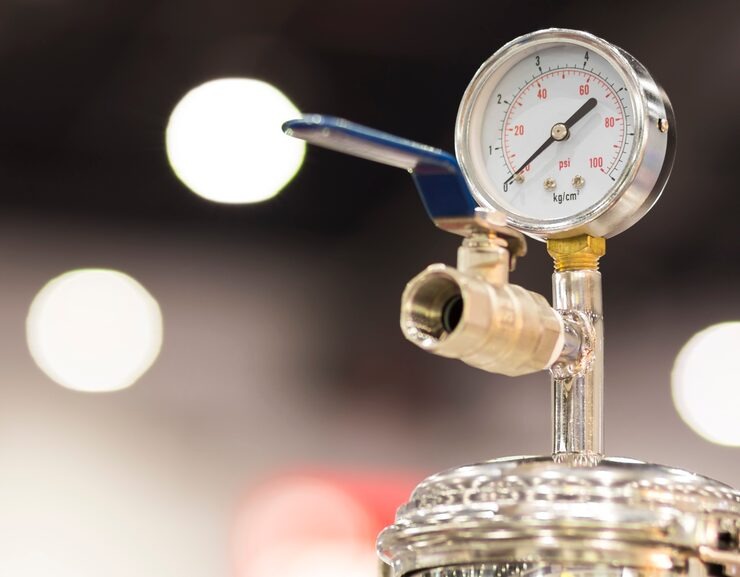
A boiler pressure gauge gives you critical information about the pressure inside a pressurized system. When that gauge is inaccurate, you may miss a dangerous pressure condition, making regular calibration an important part of boiler safety and preventive maintenance.
Boilers operate under pressure, so you need reliable measurements to make informed operating decisions. A gauge that reads lower than the actual system pressure can create a particularly serious problem: you may believe the boiler is operating within its normal range when pressure is actually climbing beyond the intended limit.
How Can Gauge Calibration Reduce Boiler Pressure Risks?
Pressure gauge calibration helps verify that the gauge reading corresponds accurately to a known pressure standard. This gives you greater confidence that the pressure information available to operators reflects actual system conditions.
Your boiler controls, safety procedures, and operator decisions depend on pressure information. If the gauge has drifted, become damaged, or developed mechanical problems, the displayed reading may no longer represent actual pressure.
For example, imagine your boiler gauge displays a pressure level that appears normal. If the instrument is under-reporting pressure, the actual pressure could be significantly higher than the displayed value. Without proper verification, that discrepancy may remain unnoticed.
Working with Industrial Scale & Measurement for professional measurement support can help you maintain greater confidence in critical pressure-monitoring equipment.
Calibration does not replace pressure relief valves, safety controls, inspections, or required boiler maintenance. Instead, it supports the measurement side of your overall safety program.
What Happens When a Pressure Gauge Becomes Inaccurate?
An inaccurate pressure gauge can cause you to make operating decisions based on incorrect information. The risk becomes greater when gauge error is combined with control-system problems, blocked safety devices, or poor maintenance practices.
Several conditions can affect gauge performance:
- Mechanical wear inside the gauge
- Vibration from nearby equipment
- Excessive pressure exposure
- Temperature changes
- Corrosion or contamination
- Pressure spikes
- Physical impact
- Age-related measurement drift
Your gauge may continue to move and appear functional even when its readings have shifted away from the correct pressure.
That is why simply checking whether the needle moves is not enough. You need to know whether the instrument is producing an accurate reading under controlled conditions.
Why Is Professional Pressure Gauge Calibration Important?
Professional calibration compares your pressure gauge against a known reference to identify measurement error and determine whether the instrument remains suitable for use. The process can provide documented information about gauge performance rather than relying on visual assumptions.
When you use dedicated Pressure Gauge Calibration Services, the gauge can be evaluated against appropriate pressure standards and its performance assessed across relevant measurement points.
Calibration can help you identify:
- Zero errors
- Reading deviations
- Repeatability problems
- Excessive measurement drift
- Instrument damage
- Gauges that require adjustment or replacement
The goal is not simply to make a gauge “look right.” Your objective is to establish whether its measurements are dependable enough for the application.
For boiler systems, that distinction matters because pressure is directly connected to operating conditions and safety decisions.
How Should You Use Calibration as Part of Boiler Maintenance?
You should treat gauge calibration as one component of a broader preventive maintenance program rather than waiting until a gauge appears obviously defective.
Start by identifying which pressure gauges are critical to your boiler operation. Record their locations, measurement ranges, equipment identifiers, and previous calibration dates.
Then establish a review interval based on factors such as:
- Operating environment
- Gauge type and accuracy requirements
- Pressure and temperature conditions
- Equipment history
- Manufacturer recommendations
- Applicable inspection or regulatory requirements
- Previous calibration results
You should also maintain clear records. A calibration history can help you identify recurring measurement drift and determine whether an instrument needs more frequent attention.
If the same gauge repeatedly shows significant deviation, replacing it may be more appropriate than continuing to recalibrate an unreliable instrument.
What Warning Signs Should You Never Ignore?
You should investigate a pressure gauge whenever its behavior appears inconsistent with the boiler’s actual operating conditions. A questionable reading should never be dismissed simply because the system appears to be functioning normally.
Watch for signs such as:
- A needle that sticks or moves erratically
- Sudden unexplained pressure changes
- A gauge that does not return to zero
- Readings that conflict with another verified instrument
- Visible damage to the gauge
- Condensation or contamination inside the dial
- Unusual vibration around the instrument
- Pressure readings that do not match expected process conditions
If you notice a potentially dangerous boiler condition, follow your facility’s emergency procedures and have qualified personnel evaluate the equipment. Do not rely on an unverified gauge to determine whether a pressurized system is safe.
Can Calibration Alone Prevent a Boiler Blast?
No. Calibration alone cannot prevent every boiler accident, but accurate pressure measurement can reduce one important source of risk: incorrect pressure information.
Boiler safety depends on multiple layers of protection. These may include properly functioning safety valves, pressure controls, combustion controls, inspections, maintenance, operator training, and compliance with applicable requirements.
Your pressure gauge is one part of that system.
Think of calibration as a way to strengthen the information layer. When your operators can trust the pressure reading, they have better information for identifying abnormal conditions and responding according to established procedures.
That makes calibration a preventive control—not a substitute for the rest of your boiler safety program.
How Can You Build a Better Calibration Routine?
A practical calibration routine starts with identifying critical gauges, documenting their condition, scheduling appropriate verification, and acting on calibration results.
You can improve your process by:
- Inventorying critical gauges: Record every pressure gauge associated with important boiler equipment.
- Establishing intervals: Base calibration frequency on application, operating conditions, history, and applicable requirements.
- Documenting results: Keep calibration records so you can identify trends over time.
- Investigating deviations: Do not ignore readings that fall outside your acceptable tolerance.
- Replacing unreliable instruments: Repeated failures or excessive drift may justify replacement.
- Coordinating maintenance: Include gauges in your broader inspection and preventive-maintenance program.
Industrial Scale & Measurement can support this measurement-focused approach by helping you address calibration needs before an unreliable gauge becomes an overlooked weakness in your maintenance process.
FAQs About Boiler Pressure Gauge Calibration
How often should boiler pressure gauges be calibrated?
The appropriate interval depends on the gauge, application, operating environment, performance history, manufacturer guidance, and applicable requirements. Critical gauges may require more frequent verification.
Can an inaccurate pressure gauge cause a boiler explosion?
An inaccurate gauge can contribute to unsafe decisions by providing incorrect pressure information. It is one potential risk factor, which is why accurate measurement should be part of a comprehensive boiler safety program.
What are the signs of a bad pressure gauge?
Common warning signs include erratic movement, failure to return to zero, visible damage, inconsistent readings, sticking needles, and readings that conflict with a verified reference instrument.
Does calibration replace a pressure relief valve?
No. Calibration verifies measurement accuracy. A pressure relief valve is a separate safety device designed to provide protection against excessive pressure.
Why should calibration results be documented?
Documentation gives you a record of instrument performance, supports maintenance decisions, and helps you identify recurring drift or other problems that may require corrective action.
Protect Your Pressure Measurement System
A boiler depends on multiple safety controls, but you cannot make sound operating decisions when a critical pressure gauge is giving you unreliable information. Regular calibration helps you verify that your measurement equipment remains fit for its intended purpose.
If your facility needs professional support for pressure gauge calibration or other industrial measurement requirements, contact Industrial Scale & Measurement to discuss your calibration needs and schedule appropriate service.