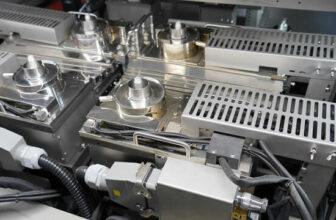
The electronics manufacturing industry is witnessing a transformative era marked by the introduction and integration of advanced technologies. Among these innovations, selective soldering has emerged as a milestone, significantly enhancing the assembly process of printed circuit boards (PCBs). This sophisticated soldering technique is not just streamlining production lines but also refining the quality and efficiency of electronic devices.
Selective soldering machines cater predominantly to the needs to attach through-hole components to PCBs with high precision. Esteemed for their accuracy and reliability, these machines are revolutionizing industries that demand meticulous attention to detail and faultlessness—fields like automotive electronics, aerospace, industrial PCB assembly, and more.
The heart of selective soldering’s prowess lies in its precision. These machines specifically target only those parts of the PCB where solder is necessitated, thereby reducing the risk of thermal shock to other components of the board. Automotive manufacturers use selective soldering technology extensively for the production of electronic control units (ECUs) and advanced driver-assistance systems (ADAS) modules—areas where preciseness is paramount. The aerospace industry, known for its stringent quality standards, relies on these machines for high-reliability avionics boards.
Selective soldering machines, particularly automated selective soldering machines, epitomize efficiency. They automate the soldering process, which not only accelerates production times but also diminishes human error, thereby ensuring a consistent output quality. This automated advantage is critical in industries like consumer electronics, where the nature of production can shift quickly from one product to another.
Speaking of economical solutions, economical selective wave soldering machines offer a cost-effective alternative to more traditional soldering methods. By using these machines, manufacturers can do more than just save costs; they effectively manage resources, reducing waste and optimizing the use of materials. This aspect is crucial in producing energy-efficient and budget-friendly electronics without compromising on quality.
The selective wave soldering machine, and particularly the inline selective wave soldering machine, introduce an additional layer of sophistication. These machines are specifically designed for seamless integration into existing production lines, enhancing throughput without the necessity of significant reconfigurations. Their design is tailored to meet the demands of high-volume manufacturing environments, emphasizing productivity without sacrificing the quality that comes with selective soldering.
As industries move towards automation and smarter manufacturing solutions, selective soldering stands out. It not only supports quality and efficiency but also adapts to various production scales and complexities. Its versatility makes it a preferred choice in various applications, including new energy sectors like electric vehicles (EVs), where battery management systems (BMS) and power electronics require reliable soldering of high-load connections.
Precisely handling complex and densely packed boards becomes feasible with selective soldering. The CE and ISO certifications of these machines further reaffirm their compliance with international safety and quality standards. This recognition is supported by widespread adoption, with manufacturers in over 85 countries utilizing these advanced soldering solutions.
For those keen on exploring further details about selective soldering, additional resources and technical insights are available here https://en.wikipedia.org/wiki/Selective_soldering.
The era of selective soldering epitomizes a significant leap towards sophisticated manufacturing processes in the electronics industry. By enhancing quality, efficiency, and reliability, selective soldering machines are indeed changing the game and reshaping the landscape of electronics manufacturing. This technological evolution not only underscores the importance of innovation in maintaining industry standards but also promises a future where superior electronics production is not just an aspiration but a reality.