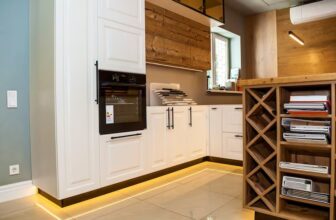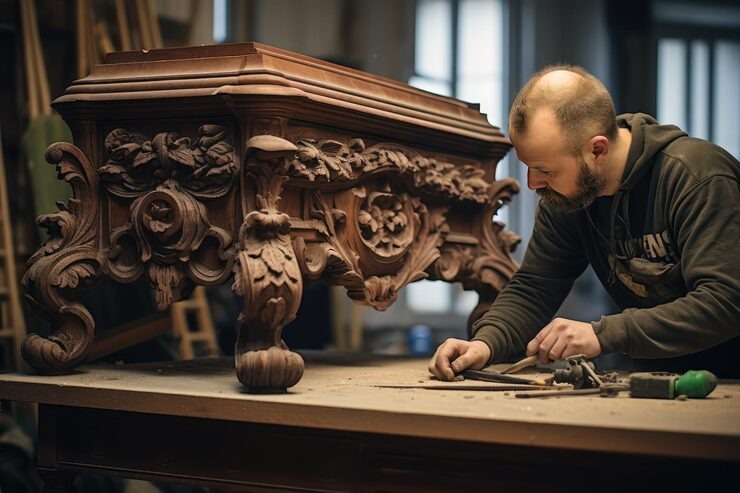
Imagine walking into your kitchen and running your hand along the edge of a new cabinet. The drawer slides open with a silent, effortless glide; the seams where the wood meets the wall are so tight they look painted on; and every handle aligns to the millimeter. This isn’t luck. It is the result of a rigorous, technical process where “close enough” is never an option.
When you invest in high-end cabinetry, you aren’t just buying boxes for your dishes—you are buying engineered furniture designed to survive decades of daily use. To achieve this level of perfection, experts employ a blend of old-world craftsmanship and space-age technology.
Here is how the pros ensure every cut, joint, and finish meets the gold standard of precision.
1. The Foundation: Laser-Accurate Field Measurements
Precision doesn’t start in the workshop; it starts in your home. Expert designers know that no wall is perfectly plumb and no floor is perfectly level. Even in brand-new builds, settling occurs.
Professional designers use 3D laser scanners or digital templates to create a “point cloud” of your room. This technology captures every slight bump in the drywall and every fraction of a degree in a corner’s angle. By accounting for these imperfections at the start, the cabinets can be built to “scribe” perfectly to your specific walls, eliminating the need for bulky filler strips that scream “amateur hour.”
2. Digital Twin Modeling (CAD/CAM)
Before a single saw blade touches wood, your cabinets exist in a digital universe. Experts use Computer-Aided Design (CAD) to create a “digital twin” of your project.
This software allows designers to:
- Stress-test the layout: Ensuring drawers won’t hit oven handles when opened.
- Optimize Grain Matching: High-end makers can digitally overlay wood grain patterns across multiple doors to ensure a seamless, continuous flow.
- Automate Tooling: Once the design is perfected, the data is sent to a CNC (Computer Numerical Control) machine.
3. The Power of CNC Machining
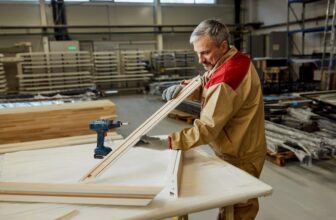
While hand-cut joinery is a beautiful art, the human eye cannot compete with a CNC router when it comes to repeatable accuracy. These machines cut components with a tolerance of less than 0.001 inches.
Whether it’s the “boring” for adjustable shelf pins or the complex dovetails for a drawer box, the CNC ensures that every piece is identical. This level of consistency is what makes the difference between a cabinet door that hangs straight and one that sags after six months.
4. Material Selection and Moisture Control
You might think precision is just about cutting, but it’s actually about chemistry. Wood is a “living” material that expands and contracts with humidity.
Experts ensure precision by:
- Kiln-Drying Verification: Using moisture meters to ensure the lumber is at the optimal 6-8% moisture content before milling.
- Acclimatization: Allowing the wood to rest in a climate-controlled shop environment so it stabilizes before it is joined.
- Material Choice: Using high-grade substrates like furniture-grade plywood or MDF for painted finishes, which offer superior dimensional stability compared to solid wood panels that might warp.
5. Specialized Joinery Techniques
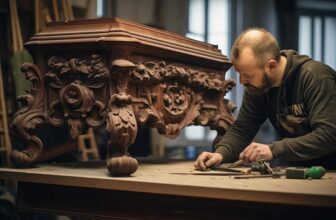
Precision is useless if the cabinet falls apart. Experts use joinery that reinforces the structural integrity of the design. Mortise and tenon joints or dovetail construction provide more surface area for glue and mechanical locks that resist the “racking” forces of heavy stone countertops.
When you work with premier Custom Cabinet Makers Maryland, you’ll notice they rarely rely on simple nails and staples. They use wood-to-wood connections that ensure the cabinet remains a perfect 90-degree box for the life of the home.
6. The Final “Fit and Finish”
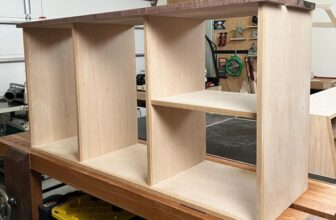
The final stage of precision happens during the dry-fit. Before finishing, experts assemble the entire run of cabinets in the shop. This allows them to:
- Check the “reveal” (the gap between doors) to ensure it is perfectly uniform.
- Test all soft-close hardware.
- Verify that the finish—whether a hand-rubbed stain or a conversion varnish—is applied in a dust-free environment to a specific micron thickness.
If you are ready to transform your space with this level of detail, you can Contact Us to discuss your vision. For those seeking the pinnacle of local craftsmanship, Meisterbuilders Inc represents the intersection of traditional quality and modern engineering.
Frequently Asked Questions
1. Why is a “scribe” important in cabinet design?
A scribe is an extra bit of wood on the cabinet side that an installer trims to match the exact curves of your wall. This ensures there are no gaps between the cabinet and the wall, providing a seamless, built-in look that standard store-bought cabinets can’t achieve.
2. What is the difference between framed and frameless cabinets?
Framed cabinets have a structural wood “picture frame” on the front, offering a traditional look. Frameless (European-style) cabinets rely on thicker box construction and offer more interior space and a sleek, modern aesthetic. Both require extreme precision to ensure doors align perfectly.
3. Does the type of wood affect the precision of the build?
Yes. Hardwoods like maple and oak are more stable and hold fine tolerances better than softwoods. For painted cabinets, experts often use high-density fiberboard (MDF) because it doesn’t expand or contract, preventing the paint from cracking at the joints over time.
4. How do I know if my cabinets are high-quality?
Check the drawer boxes. High-quality cabinets feature solid wood drawer sides with dovetail joints and “undermount” soft-close slides. Look at the “reveal” (the gaps between doors); if they are perfectly uniform across the entire kitchen, you are looking at expert-level precision.
5. Why are custom cabinets better than semi-custom options?
Semi-custom cabinets come in 3-inch increments, leading to wasted space and “filler” strips. True custom cabinets are built to the sixteenth of an inch, maximizing every inch of your floor plan and allowing for unique features tailored specifically to your appliances and workflow.