Crypto events have become a cornerstone of the Web3 ecosystem. From global blockchain conferences to local meetups and virtual summits, these events bring together developers, investors, founders, and communities shaping the future of decentralized technology.
However, as the number of events continues to grow, competition for attention has increased significantly. Simply organizing an event is no longer enough success now depends on how effectively it is marketed.
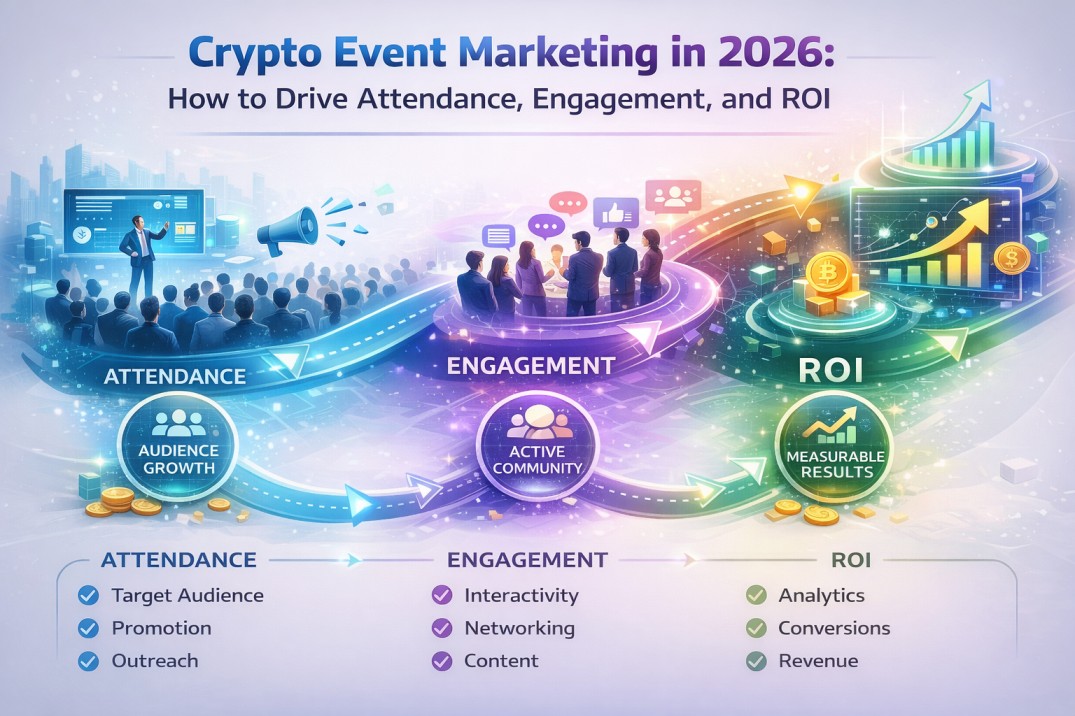
In 2026, crypto event marketing requires a strategic, community-driven approach that focuses on attendance, engagement, and measurable ROI. This guide explores how to achieve all three.
Why Crypto Event Marketing Is More Competitive in 2026
The Web3 space is evolving rapidly, with new projects and events launching every month. As a result:
- audiences are more selective about which events to attend
- attention spans are shorter
- communities expect value-driven experiences
- competition between events is higher than ever
To stand out, event organizers must adopt advanced crypto event marketing strategies that go beyond basic promotion.
Driving Attendance: Attracting the Right Audience
Targeted Audience Segmentation
One of the most effective ways to increase attendance is by targeting the right audience. Not all Web3 users are the same developers, traders, investors, and founders all have different interests.
Understanding your audience allows you to:
- tailor messaging
- create relevant content
- promote the event through the right channels
This ensures higher-quality participation.
Multi-Channel Promotion
Successful crypto conference promotion relies on using multiple channels to reach audiences.
Key platforms include:
- Twitter (X) for real-time discussions
- Discord and Telegram for community engagement
- LinkedIn for professional networking
- email campaigns for direct communication
A multi-channel approach increases visibility and reach.
Early Awareness Campaigns
Building momentum early is crucial. Instead of promoting the event only a few weeks before launch, successful campaigns start months in advance.
This includes:
- teaser announcements
- speaker reveals
- countdown campaigns
Early awareness helps generate anticipation and secure registrations.
Boosting Engagement: Creating Meaningful Interactions
Community-First Approach
Community is at the core of web3 event marketing. Engaging your community before, during, and after the event significantly improves participation.
Strategies include:
- interactive discussions on Discord
- community polls and feedback
- user-generated content
An active community amplifies event visibility organically.
Interactive Content and Experiences
Modern events are no longer passive experiences. Attendees expect interaction and participation.
Examples include:
- live Q&A sessions
- audience polls
- networking sessions
- gamified experiences
These elements keep participants engaged and involved.
Influencer and Speaker Engagement
Speakers and influencers can play a major role in driving engagement. Their audiences often follow them to events, increasing participation.
Collaborations may include:
- speaker-led promotions
- live discussions and AMAs
- social media engagement
This helps expand reach and credibility.
Maximizing ROI: Measuring Event Success
Defining Key Metrics
To evaluate success, it’s important to define clear metrics.
Common KPIs include:
- number of registrations
- attendee participation rates
- social media engagement
- partnerships generated
- post-event conversions
Tracking these metrics helps measure ROI effectively.
Leveraging Data Analytics
Data plays a crucial role in optimizing blockchain event marketing strategies. By analyzing user behavior and campaign performance, organizers can refine their approach.
This includes:
- tracking user engagement
- identifying high-performing channels
- optimizing campaigns in real time
Data-driven decisions improve overall results.
Post-Event Engagement
ROI doesn’t end when the event is over. Continuing engagement after the event helps maximize long-term value.
Strategies include:
- sharing recorded sessions
- publishing event summaries
- maintaining community discussions
- nurturing leads
Post-event engagement strengthens relationships and drives future growth.
Advanced Crypto Event Marketing Strategies for 2026
AI-Powered Marketing
Artificial intelligence is increasingly used to personalize marketing campaigns, analyze audience behavior, and optimize content strategies.
Token-Gated Access and Incentives
Token-based access systems create exclusivity and encourage participation. Incentives such as NFT tickets or rewards can increase engagement.
Hybrid and Global Events
Combining physical and virtual formats allows events to reach a global audience while maintaining in-person interaction.
Strategic Partnerships
Collaborating with other Web3 projects expands reach and introduces the event to new communities.
Common Mistakes to Avoid
Even well-planned events can fail if certain mistakes are made.
Avoid:
- relying only on one marketing channel
- neglecting community engagement
- starting promotion too late
- focusing on quantity over quality of attendees
A balanced and strategic approach is key.
The Future of Crypto Event Marketing
As blockchain adoption continues to grow, crypto event marketing will become more sophisticated and data-driven.
Future trends include:
- metaverse-based events
- decentralized event platforms
- AI-driven personalization
- immersive virtual experiences
These innovations will reshape how events are marketed and experienced.
Conclusion
In 2026, successful crypto event marketing is about more than just promotion it’s about creating meaningful experiences that attract, engage, and deliver value.
By focusing on targeted audience strategies, community engagement, multi-channel promotion, and data-driven decision-making, event organizers can drive attendance, increase engagement, and maximize ROI.
As the Web3 ecosystem continues to evolve, those who adopt innovative marketing strategies will stand out and create impactful event