

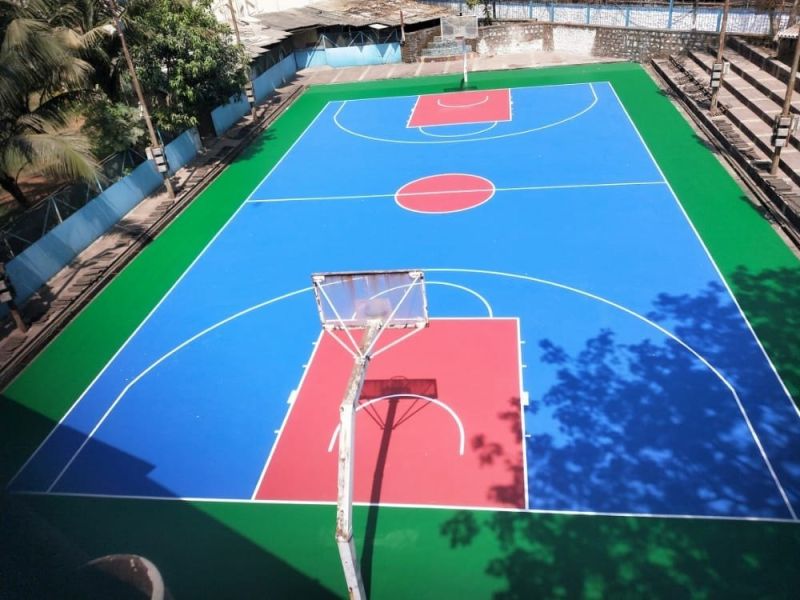
In the world of sports infrastructure, the quality of the playing surface isn’t just a detail — it’s a performance driver. Synthetic acrylic sports flooring has become one of the most widely chosen solutions for indoor and outdoor courts due to its balance of performance, durability, and cost. This article explores what synthetic acrylic sports flooring is, its benefits, design attributes, installation process, applications, maintenance protocols, and factors to consider when choosing it for sports facilities.
1. What Is Synthetic Acrylic Sports Flooring?
Synthetic acrylic sports flooring refers to a polymer-based surface system applied over a stable base (often concrete or asphalt) to create a playable area for various sports. Made primarily from acrylic resins blended with fillers, pigments, and performance additives, these coatings form multi-layer, textured surfaces that deliver consistent ball bounce, traction, and shock absorption.
It’s especially popular for:
-
Multipurpose outdoor courts
-
Recreational areas
2. Key Components & Construction
A typical synthetic acrylic sports flooring system includes:
✔ Primer Coat
A bonding layer that ensures adhesion between the substrate and subsequent coatings.
✔ Leveling/Filler Coat
Smooths surface irregularities and builds a stable base.
✔ Color Coats
Pigmented acrylic layers that provide visual appeal and protect the underlying material.
✔ Textured/Granular Layer
Often silica sand or similar aggregates are added for:
-
Increased grip
-
Controlled ball response
-
Enhanced durability
✔ Optional Line Markings
Applied using contrasting acrylic paints to define play zones.
Each layer builds on the previous one to create a cohesive, long-lasting performance surface.
3. Advantages of Synthetic Acrylic Sports Flooring
Synthetic acrylic flooring offers significant benefits for sports planners and facility managers:
🌟 Exceptional Performance
-
Consistent ball bounce and surface reaction
-
Stable traction to support quick movements
-
Balanced friction for running, pivoting, and stopping
💪 Durable & Weather-Resistant
-
UV resistant — color holds up under sun exposure
-
Withstands varying temperatures and moisture
-
Resistant to cracking and surface wear
⚖ Cost-Effective
Compared to specialized rubber or polyurethane systems, acrylic surfaces are:
-
Lower in material cost
-
Faster to install
-
Easier to maintain
🎨 Aesthetic Flexibility
Available in various colors and line-marking options to match branding or sport requirements.
🧽 Easy Maintenance
Periodic cleaning and recoating keep the surface in good condition with minimal effort.
4. Performance Attributes Explained
✔ Surface Hardness
Synthetic acrylic surfaces tend to be firmer than rubber or elastomeric floors — suitable for sports where ball dynamics and speed are essential.
✔ Traction & Grip
The textured layers can be tuned (fine to coarse) depending on sport:
-
Finer texture for basketball or indoor play
-
Slightly rougher texture for tennis and outdoor courts
✔ Shock Absorption
While not as cushioned as some specialized floors, acrylic systems provide sufficient comfort for recreational and competitive play, especially when paired with underlying flexibility (e.g., shock pads).
5. Typical Applications
🏀 Basketball Courts
Great bounce and quick traction make acrylic surfaces suitable for amateur to semi-professional courts.
🎾 Tennis Courts
Resilient play quality and weather tolerance help meet specification standards for club and community courts.
🏐 Volleyball & Multi-Sports Courts
Adjustable surface texture allows courts to serve multiple disciplines with one flooring.
🏃♂️ Recreational & Community Spaces
Durable and cost-efficient for parks, schools, and recreation centers.
6. Installation Overview
Installing synthetic acrylic sports flooring should follow strict protocols for performance and longevity:
1. Surface Preparation
-
Remove loose material, oils, contaminants
-
Grind or shot blast to ensure profile
-
Repair cracks or uneven patches
2. Priming
A primer layer enhances bonding, especially on porous surfaces.
3. Layer Application
Each coating is applied in sequence:
-
Filler coat
-
Base coats
-
Textured coats (with or without aggregates)
-
Final color/top coats
4. Curing
Each layer requires proper drying time — typically 24-48 hours between coats.
5. Line Marking
After final curing, sport-specific lines are painted with precision.
Correct environmental conditions (temperature, humidity, no rain) during installation significantly affect performance.
7. Maintenance Best Practices
Daily/Weekly
-
Sweep debris
-
Wash with mild detergent and water
Periodic
-
Check for surface wear and blistering
-
Touch up lines and high-traffic areas
Long-Term
-
Recoat every 3-5 years (depending on usage and climate)
-
Address substrate cracks promptly
Proper upkeep extends lifespan and maintains safety and performance.
8. Pros & Cons
| Pros | Cons |
|---|---|
| Cost-effective | Not as cushioned as rubber systems |
| Weather-resistant | Limited shock absorption |
| Durable & long-lasting | Requires skilled installation |
| Aesthetic flexibility | Requires surface prep expertise |
9. Cost Considerations
Pricing depends on:
-
Surface condition and prep requirements
-
Number of coats and thickness
-
Texture granules and additives
-
Court size and layout
Overall, acrylic sports flooring offers one of the most affordable life-cycle costs among performance sports surfaces.
Closing Thoughts
Synthetic acrylic sports flooring continues to be a leading choice for sports facilities worldwide because it balances performance, durability, versatility, and cost. Whether designing a new outdoor tennis court or refurbishing an indoor basketball arena, understanding the material properties and installation intricacies empowers stakeholders to make informed decisions that benefit athletes and facility owners alike.
